


What if the nursery’s most practical piece became one your family treasures for years to come? Luxury nursery storage trunks can do more than hold toys and blankets. Chosen thoughtfully, they bring visual calm to a busy room and can take on new meaning as your child grows.
It’s understandable to want storage that feels beautiful without overlooking safety. A heavy lid, unclear finish details or a style that clashes with bespoke bedding can make the choice feel complicated. So what should you look for in a trunk that’s well made and suited to your nursery?
This guide explains how to assess construction, materials and practical safety details, then consider scale, colour and finish alongside custom bedding and heirloom blankets. It also covers how to plan a piece around your nursery’s character, rather than settling for something that doesn’t suit the room. From everyday organisation to future keepsakes, the right choice can work now and remain useful later.
Key Takeaways
- Use a trunk as a considered focal point to bring order and visual calm to the nursery.
- Compare materials and construction, and ask about safety features such as supported lids and ventilation.
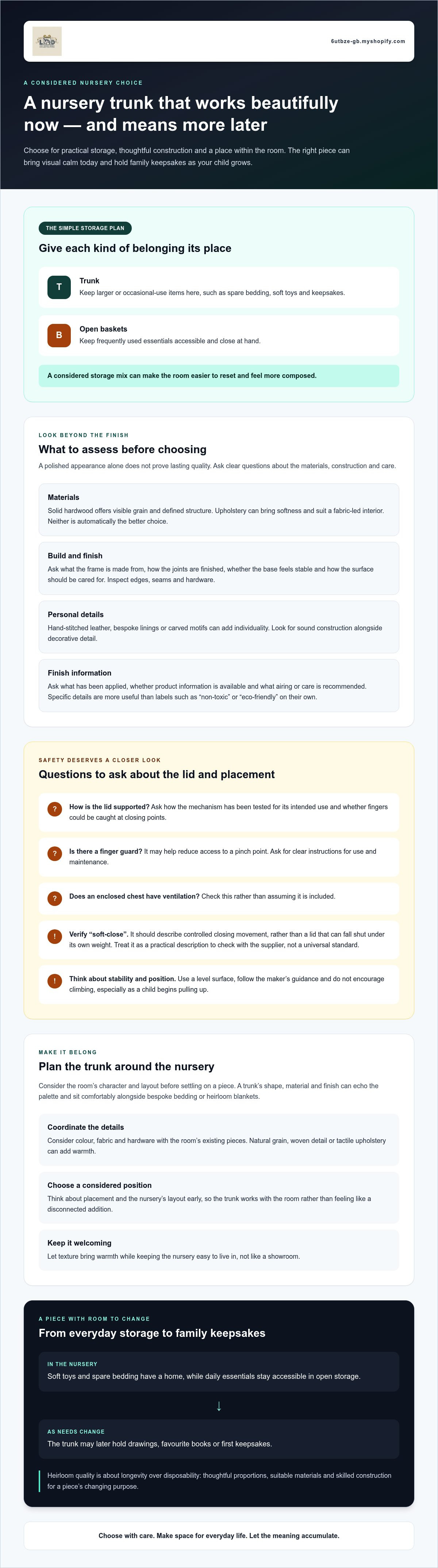
- Use a trunk for larger or occasional-use items, while keeping frequently used essentials accessible in open baskets.
- Plan colours, fabrics and hardware alongside custom bedding and heirloom blankets for a cohesive look.
- Consider placement and possible future use early, so the trunk suits the room’s layout and changing needs.
Beyond Clutter: Why Luxury Nursery Storage Trunks are the Anchor of a Visionary Space
A nursery can be carefully planned and still feel unsettled if blankets, toys and keepsakes have nowhere to go. A well-chosen trunk gives larger or less frequently used items a home, while baskets can keep daily essentials close at hand. The result is a room that feels composed and remains practical as routines change.
When belongings have a place, resetting the room at the end of the day can be simpler: put things away, close the lid and move on. A trunk also gives the eye a deliberate focal point. Its shape, material and finish can echo the nursery’s palette and sit comfortably alongside bespoke bedding or heirloom blankets, rather than feeling like a disconnected addition.
There’s an emotional dimension, too. The same piece that holds soft toys and spare bedding today may later protect drawings, favourite books or first keepsakes. Explore the historical and cultural context of the hope chest, traditionally used to gather treasured items for the future. A nursery trunk can carry a similar sense of intention without needing to follow a formal tradition.
The Psychology of a Curated Nursery
Visual order can make a room feel calmer and easier to use for both parent and child. Keep everyday necessities accessible in open storage, and reserve the trunk for bulkier or occasional-use pieces. Consider how the surface feels as well as how it looks. Natural grain, woven detail or tactile upholstery can add warmth, while the room should still feel welcoming and easy to live in, not like a showroom.
Defining the Heirloom Quality Standard
Luxury can mean choosing longevity over disposability: thoughtful proportions, suitable materials and skilled construction that work for the room and its changing purpose. A polished appearance alone doesn’t prove lasting quality. Ask what the frame is made from, how its joints are finished, whether the base feels stable and how the surface should be cared for. Look closely at edges, seams and hardware. Clear answers make it easier to judge whether a piece is built for regular use rather than a short-lived trend.
That’s the idea behind heirloom organisation: fewer temporary fixes and more considered choices. As part of a wider nursery design, a trunk can serve as a functional anchor now and a place for family memories later. Choose with care, make space for everyday life and let the meaning accumulate.
The Anatomy of Excellence: Evaluating Materials, Craftsmanship, and Safety
A refined finish matters, but so do the materials beneath it and the way the lid behaves. Luxury nursery storage trunks should suit family life, not simply look impressive in a photograph. Before choosing, consider what you’ll store, how often you’ll open the trunk and whether its construction and care requirements suit your nursery.
Solid hardwood offers visible grain and a defined structure, while upholstery can bring softness and suit a fabric-led interior. Neither is automatically the better choice. Inspect the build, seams and joins, and ask how the surface will cope with regular handling and spills. Details such as hand-stitched leather, bespoke linings or carved motifs can add individuality, but should be matched by sound construction.
Safety Details to Check
A heavy lid deserves particular scrutiny. Ask the maker or retailer how it’s supported, whether the mechanism has been tested for its intended use and whether fingers could be caught at closing points. A finger guard may help reduce access to a pinch point. Check whether an enclosed chest has ventilation, too. Request clear instructions for use and maintenance rather than assuming a feature is safe because it looks substantial.
For a luxury trunk, “soft-close” should describe a lid whose closing movement is controlled, rather than one that can fall shut under its own weight. Treat this as a practical description to verify with the supplier, not as a claim about a universal standard. As a child begins pulling up, consider stability and placement as well. Use a level surface, follow the maker’s guidance and don’t encourage climbing.
For finishes, ask what has been applied, whether product information is available and what airing or care the maker recommends before use. The phrases “non-toxic” and “eco-friendly” don’t explain the finish or its emissions on their own. Specific product details are more useful than a reassuring-sounding label.
Artisan Craftsmanship and Material Sourcing
Ask where the timber comes from and whether the maker can explain its sourcing. Hand-finishing may create subtle variations in grain or colour, giving a bespoke piece its own character. It shouldn’t disguise uneven construction or poorly finished edges. For upholstery, request information about the fabric’s weave, cleaning method and suitability for regular use. A delicate textile may look exquisite but need more careful upkeep than a tightly woven alternative.
Safety and beauty needn’t compete. Architectural Digest offers a design reference for integrating bespoke storage into your nursery design, showing how materials can contribute to a cohesive room. If you’re bringing custom bedding, heirloom blankets and artisan storage together, consider how each choice supports the overall scheme. Coordination can make practical storage feel like a natural part of the nursery, rather than an afterthought.
Trunks, Baskets, or Wardrobes? Finding the Right Storage Hierarchy
A thoughtful storage plan gives each format a clear role. Wardrobes suit hanging clothes and folded items. Baskets keep everyday essentials visible and easy to move. A trunk gives larger or less frequently used belongings a dedicated home. This layered approach helps you organise for real routines without putting every item on display.
The Comparison Framework: Trunk vs. Basket
Baskets make frequently used items easy to spot and reach. Keep muslins near the changing area, for example, or use a basket to gather toys after play. Their portability is useful when routines shift around the room. A trunk is better suited to belongings you want to group together and keep out of sight. Its deeper interior can accommodate bulkier bedding and blankets that may not fit neatly into smaller open containers.
A trunk can be a considered place for handmade heirloom baby blankets, alongside spare bedding or keepsakes you want to store together. A closed lid also creates a quieter visual surface, particularly in a room where shelves and baskets already hold everyday necessities. Choose according to access: things used often should be easy to reach; occasional-use pieces can be tucked away.
Built-in wardrobes remain useful for clothing and items that need hanging or dedicated shelves. A trunk supplements that storage rather than replacing it. Before choosing a position, check that the trunk won’t obstruct wardrobe doors, walkways or access to other furniture. For daily essentials, explore a variety of designer nursery storage ideas and consider baskets that keep useful items visible and portable.
- Choose a trunk for bulky bedding, blankets and belongings you’d prefer to keep concealed.
- Choose baskets for frequently used items that need to stay visible and easy to carry.
- Use a wardrobe for clothes and items best stored on hangers or shelves.
Different storage formats can also add visual depth to a nursery. Let the trunk provide a grounded focal point, then introduce baskets for contrast in texture and scale. A coordinated palette helps the pieces feel related, while clear surfaces and floor space prevent the room from feeling overfilled.
Future-Proofing Your Storage Choice
Consider how the trunk might serve your family beyond the nursery. A versatile silhouette and finish may suit a bedroom as a linen chest or work in another room if its dimensions and construction fit. Don’t assume it’s suitable for seating unless the maker confirms that use. Look for a design that isn’t tied too closely to a babyish theme, and think about whether its proportions will remain useful as the contents change.
Long-term value comes from choosing for both present needs and possible future use. A well-considered piece can adapt as your family’s storage priorities evolve.
Personalising Your Legacy: A Guide to Bespoke Finishes and Customisation
A bespoke luxury nursery storage trunk takes shape through decisions that reflect your nursery, rather than a preset scheme. Begin with details already chosen: the pattern and colours of your luxury nursery bedding, the room’s natural light and the furniture you want the trunk to sit alongside. Lively Distinct Designs Inc creates bespoke nursery interiors and bedding, so storage can be considered as part of the wider design conversation rather than as an isolated choice.
Coordinating with Bespoke Interiors
Bring fabric swatches, photographs and colour references to your design discussion. A stain that echoes a cot or nursing chair can help the trunk feel settled in the room; a deliberate contrast can make it stand out as a feature. Think about how finishes will look in the nursery’s actual light, and ask to review samples where possible. The aim isn’t to make every surface identical, but to create a palette that feels considered.
Hardware can shift the character of a piece. Brushed brass may bring quiet warmth, while hand-forged iron can introduce a more distinctive, artisanal note. Personal touches, such as a hand-painted monogram or date-of-birth engraving, can make the trunk feel connected to your family. Consider how prominently you want these details displayed and whether they’ll still feel right as the room evolves.
For the interior, ask about lining options and their care requirements. A soft, well-fitted lining can give delicate clothing or keepsakes a dedicated place. Tell the maker what you intend to store so the choice suits the contents as well as the design.
The Commissioning Process
A little preparation helps you explain your vision clearly. Before your first conversation with a designer or maker, gather:
- Photographs of the nursery and the intended nook or position.
- Measurements of the available space, including nearby furniture and fittings.
- Fabric swatches, colour references and details of finishes you’d like to complement.
- Your preferences for personalisation, hardware, lining and how the trunk will be used.
Ask which details can be customised, how design decisions are confirmed and what information you’ll receive about care and use. Lead times vary between makers and commissions, so request a current estimate and clarify what it covers before making plans around a delivery date.
Customisation turns a useful piece into a personal story, shaped by the details your family chooses and the memories it may hold.
If you’d like guidance bringing nursery storage into a wider scheme, consider Lively Distinct Designs Inc’s nursery design services alongside its custom bedding and heirloom blankets.
Curating the Complete Vision: Integrating Bespoke Storage into Your Nursery Design
A storage trunk works best when it belongs to the room’s wider composition. It can gather away bulky essentials, reduce visual clutter and create a focal point, but its scale and position should support daily routines. Consider how it relates to the cot, wardrobe, seating and pathways before deciding where it will go.
Layout Strategies for Small and Large Nurseries
In a compact nursery, measure the available floor space and check that the trunk won’t obstruct doors, drawers or routes through the room. A multifunctional piece can make better use of a considered footprint, provided its intended use is clear and the maker confirms it’s suitable for that purpose. Under a window may work if the trunk doesn’t block light or access. At the foot of the cot can also feel natural where there’s enough clearance.
Larger rooms offer more flexibility. A trunk can anchor a quiet reading corner or help distinguish a changing area from a place for play. Use it to suggest a zone, rather than create a barrier. Keep frequently used items accessible and preserve a clear route through the room. Luxury nursery storage trunks can feel substantial, so balance their presence with open space and lighter elements such as baskets.
Once you’ve settled on a position, style the top with restraint. A folded heirloom blanket or a small selection of accessories can add warmth and connect the trunk to the room’s textiles. Keep the surface practical, especially if you need to open the lid regularly. Aim for considered, not crowded.
The Lively Distinct Designs Inc Experience
Bringing a nursery vision to life means balancing atmosphere with the details that make a room work for your family. Lively Distinct Designs Inc creates bespoke nursery interiors and luxury bedding, and offers artisan-made products including nursery baskets and storage. Its nursery design services can help you consider how storage, colour, textiles and layout relate, so each choice feels purposeful rather than isolated. Explore ideas for bespoke nursery interior design as you shape the wider scheme.
Begin with the room’s needs: what must be close to hand, what needs concealing and which pieces carry family meaning? From there, thoughtful curation can bring function and feeling into alignment. A trunk may become the visual anchor, while custom bedding and heirloom blankets add softness and personal history. The result can be a nursery that feels composed, welcoming and genuinely yours.
Discover how to curate your bespoke nursery vision with a considered blend of design, textiles and storage.
Shape a Nursery That Grows with Your Family
The right storage choice does more than reduce visual clutter. It brings purpose to the room, supports everyday routines and leaves space for the objects your family will treasure. As you compare luxury nursery storage trunks, keep three principles in view: check construction and safety features carefully, give each storage type a clear role, and choose finishes that work with the nursery’s wider design.
A lasting nursery isn’t assembled from matching pieces alone. It’s shaped through thoughtful decisions about function, texture and meaning, with room for the design to evolve as your child grows. Lively Distinct Designs creates one-of-a-kind nursery interiors and artisan-made products, including custom bedding and heirloom blankets. Its design services can help bring textiles and storage into a more considered vision.
Ready to explore what feels right for your family? Begin your bespoke nursery journey with Lively Distinct Designs. Shape a space that feels welcoming now and meaningful for years to come.
Frequently Asked Questions
Are luxury nursery storage trunks safe for toddlers who are just starting to walk?
They can be used more safely when their lid, stability and placement have been carefully considered, but no trunk should be treated as childproof. Ask the maker about the lid-support mechanism, pinch points, ventilation and stability, and follow all care and use instructions. Keep the trunk on a level surface, don’t encourage climbing and supervise your child nearby. Check the product’s safety information rather than assuming a particular feature meets a specific standard.
What is the best material for a nursery trunk that needs to last for decades?
There’s no single best material, but a well-constructed hardwood trunk can be a durable choice if its joints, finish and hardware are also carefully made and maintained. Ask what the timber is, how it’s sourced and how to care for the surface. Upholstered designs can also last, provided the frame is sound and the fabric suits everyday use. Look beyond appearance: craftsmanship and suitable upkeep matter as much as material.
How do I clean and maintain a bespoke upholstered storage trunk?
Follow the maker’s care instructions for the specific upholstery, as cleaning methods vary by fabric and finish. For routine upkeep, remove dust gently and deal with spills promptly using the recommended method. Avoid applying cleaners or excessive moisture unless the instructions say they’re suitable. Ask for care guidance before commissioning, particularly if the trunk will be used frequently. Keep a record of the fabric details so future cleaning choices don’t compromise its colour or texture.
Can I customise the size of a storage trunk to fit a specific nook in my nursery?
Some makers may offer size customisation, but confirm this directly before planning around it. Measure the nook’s width, depth and height, then account for skirting boards, nearby furniture, doors and the space needed to open the lid fully. Share photographs and measurements during your design discussion. Ask the maker to confirm the final dimensions and whether the proposed position allows practical access. Don’t assume a standard trunk will fit just because its external width seems suitable.
What is the typical lead time for a bespoke artisan-made storage trunk?
Lead times vary by maker, materials and level of customisation. Ask for a current estimate before commissioning, and check whether it refers to making alone or includes delivery. Build in flexibility if you need the piece ready by a particular date.
How much storage capacity should I realistically plan for in a new nursery?
Start with the items you expect to store rather than choosing capacity by appearance. Make a short inventory of bulky bedding, blankets, keepsakes and other occasional-use pieces, then compare their folded size with the trunk’s internal dimensions. Keep daily essentials in accessible baskets or drawers, so the trunk doesn’t need to hold everything. Leave room to open the lid and retrieve items easily, and avoid filling it beyond the maker’s guidance.
Do luxury trunks come with a warranty for the soft-close mechanisms?
Warranty coverage depends on the individual maker or retailer, so don’t assume a soft-close mechanism is covered for a particular period. Before purchasing, ask what the warranty includes, how long it lasts, whether it covers the hardware and what care or maintenance is required. Request the terms in writing and clarify how to report a fault. Also ask how the lid mechanism should be used, since correct operation may be important to its longevity.
How can I coordinate my storage trunk with my bespoke bedding collection?
Use the bedding as a reference for the nursery’s colour palette, pattern and texture, rather than trying to match every detail exactly. Share fabric samples or clear photographs with the designer or maker, alongside finishes from nearby furniture. A trunk in a complementary wood tone or upholstery can connect the scheme without competing with patterned bedding. Consider the interior lining too, especially if you plan to store delicate heirloom blankets or clothing inside.


